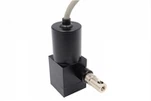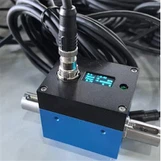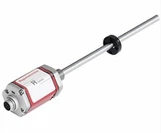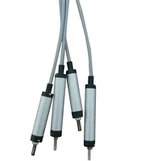

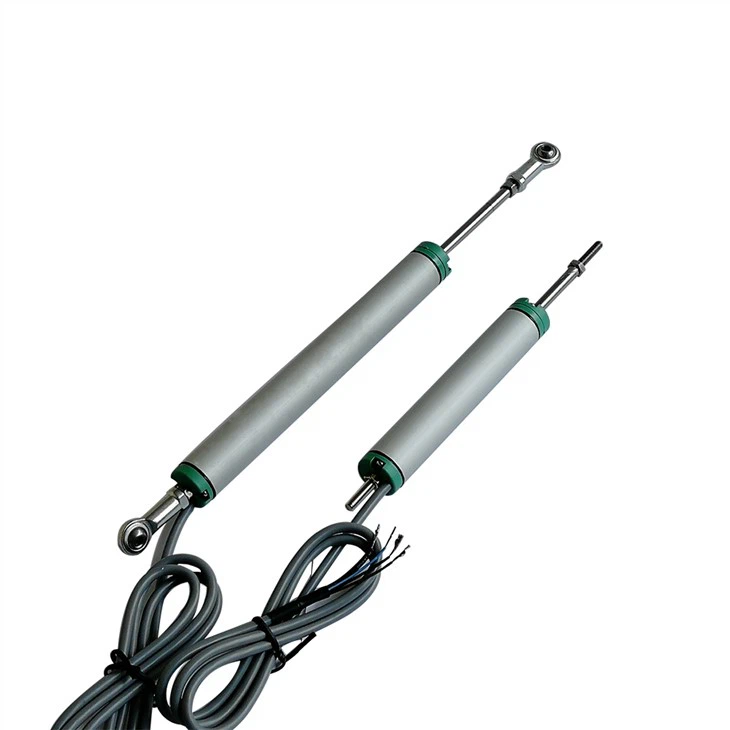


KPM Shift Position Sensor Supplier
KPM series linear displacement sensors are a type of miniature potentiometer with a circular housing. The housing diameter is available in two sizes, 18mm and 22mm. The sensors have the advantages of small size, easy installation, high accuracy, and low price. They are mainly used in equipment such as jacks (prestressed smart tensioning devices), 3D cinema seats, medical devices, robots, ejection machines, brick machines, shoe machines, and ceramic machinery.


- Compact displacement sensor;
- For harsh environmental conditions - protection class IP65;
- Mounting by ball joints, mounting brackets;
- Long lifetime and high accuracy;
- Measuring lengths from 10 mm to 300 mm;


For this model we have different diameter as below :


Installation Stpe :
1. The sensor body is fixed to the bracket;
2. The pull rod end is connected to the moving part via a universal ball joint;
3. The center line of the pull rod is aligned with the direction of movement;
4. Allow 3%~5% of travel margin at both ends;
5. Tighten the fixing screws after adjustment.
The function of the ball joint connection:
- Automatically compensates for minor installation errors;
- Prevents lateral forces from damaging the sensor;
- Reduces pull rod wear;
- Improves long-term stability.
Generally, small angle compensation within ±12° is allowed, but coaxial installation is still recommended for long-term operation.
Package and Delivery
♦ Special line with economic cost, such as ARAMEX, FedEx IE, UPS Expedited etc; approx 4-9 working days
♦ Sea trasportation with cheap freight; approx 45 days

About us
Our main products are KTC linear position sensors, LWH linear position sensors, WPS draw wire position sensors, KPM linear position sensors, KPZ linear position sensors, KTR linear position sensors and KTF linear position sensors. Besides, we have built a mutual benefit and win-win business relationship with domestic excellent factory of other sensors, such as pressure sensors, load cells, LVDT, magnetostrictive displacement sensors, ultrasonic sensors and proximity sensors.

FAQ
Q1: Can a lever-type displacement sensor be directly connected to a pneumatic or hydraulic cylinder?
Yes. It is typically connected to the piston rod via a universal joint for real-time position feedback.
Q2: Does it need to be perfectly coaxial during installation?
Coaxiality is recommended; smaller deviations result in a longer lifespan.
Q3: What is the difference between horizontal and vertical installation?
The measurement principle is the same, but vertical installation requires greater care to avoid lateral forces and gravitational impacts.
Q4: Will the lever break?
Normal installation will not, but overtravel or excessive lateral force can cause damage. Therefore, it is recommended to allow for a safety margin and set mechanical limits.
Q5: Is calibration required after installation?
Zero-point and full-scale calibration is recommended after initial installation to obtain optimal measurement accuracy.