

Load Cell
Dongguan Bo Ruge Intelligent Technology Co., Ltd is a high-tech enterprise specializing in sensor R & D, production and sales. Based on the principle of scientific and technological research and development, quality as the basis, sustainable development as the principle and perfect service as the purpose, the company introduces advanced processing equipment and management system at home and abroad, and constantly expands to the depth and breadth of sensor field. At present, the company has passed ISO9001 quality management system, and its products have CMC measurement license, ex explosion-proof certification and other first-class certification qualifications.

01
High Quality
Our load cells can replace similar products from Germany and Italy, with a shelf life of 18 months and passed CE and Rohs certificates.
02
Advanced Equipment
We have our own CNC system , various high-end testing equipment to ensure the quality of each factory product
03
Professional Team
There are 5 people in the R&D team. We have the complete pre-sales and after-sales system. And we will reply customers's requirements within 24 hours
04
Custom Service
We can customized the differnt load cells for different application. Also the customer's LOGO can be printed on the products and the package.
Products Description
-
 Spoke Wheel Load CellBRG-LF106 Spoke Wheel Load Cell Products Overview The spoke-type load cell features a classic spoke-style elastic body design and utilizes strain gauge technology to convert applied force into aAdd to Inquiry
 -
 Tiny Load CellBRG-HW116 Tiny Load Cell Features : Robust Metallic Construction: Made from stainless steel or other metallic elastomers, delivering high rigidity, strong impact resistance, and dependable corrosionAdd to Inquiry
 -
 Flat Compression Load CellBRG-150 Flat Compression Load Cell Features : Flat Compression Load Cell boasts a large force-bearing area, high measurement accuracy, good stability, and excellent output symmetry; It is widely usedAdd to Inquiry
 -
 Ring Compression Load CellBRG-02 Ring Compression Load Cell Product Introduction Ring Compression Load Cell or "donut-shaped" with a hole in the center. The load is applied to the sensor through bolts, rods, orAdd to Inquiry
 -
 Miniature Compression Load CellBRG-50 Miniature Compression Load Cell Features : The sensor features a strain gauge structure, small size, low profile, and is constructed entirely of stainless steel. High-temperature performanceAdd to Inquiry
 -

-
 Mini Load CellBRG-20-4M-H5 Mini Load Cell Features & Applications 1. Compact design for easy installation; 2. Made of stainless steel, measuring range and dimensions can be customized; 3. Primarily used inAdd to Inquiry
 -
 Ring Torsion Load CellBRG-50C Ring Torsion Load Cell Product Introduction Ring Torsion Load Cell is a force-weight sensor that resembles a ring or circle. It typically contains strain gauges and measures the minuteAdd to Inquiry
 -
 Proving Ring Type Load CellBrg-120 Proving Ring Type Load Cell Features and Applications This sensor employs a spoke-type elastomer structure, utilizing the shear stress principle. It features a low profile, resistance toAdd to Inquiry
 -
 Pillow Block Type String Tension SensorPillow Block Type String Tension Sensor Product Description The shaft table tension sensor adopts Mitsubishi structure and tension and compression design, which greatly improves its responseAdd to Inquiry
 -
 Three Pulley Tension SensorThree Pulley Tension Sensor Product Description: Three Pulley Tension sensor is a high-precision and large-range tension measurement sensor with a three-wheel structure. It can be used for portableAdd to Inquiry
 -
 Tension Strain GaugeBRG701-02 Tension Strain Gauge Features and Application High precision, strong stability, easy installation, overload protection; The shaft head tension sensor is a cantilever shaft head installationAdd to Inquiry
-
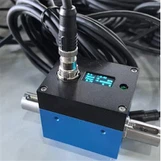 rotary torque sensor
 -
 Contactless Torque Sensor
 -
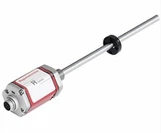 Hydraulic Cylinder Linear Position Sensor
 -
 Flange Rotary Square Drive Shaft Torque Transducer
 -
 Linear Encoder For Hydraulic Cylinder
 -
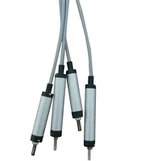 Inductive Displacement Transducer
 -
 Miniature Displacement Transducer
 -
 Draw Wire Position Sensor
 -
 Small String Potentiometer
 -
 Draw Wire Encoder
 -
 Spoke Wheel Load Cell
 -
 Crack Monitoring Gauges
 -
 Gefran Replacement Linear Potentiometer Position Sensor S...
 -
 High Accuracy Linear Encoder For CNC Milling Machine
 -
 Gefran Replacement Linear Motion Position Sensor
 -
 Industrial Gefran Linear Potentiometer Sensor Supplier
- Tel: +86-13829258717
- Email: vicky@brgsensor.com
- Add: Room 310, No.5 Chuangye Bada Road, Guancheng Street, Dongguan, Guangdong, China.
Products advantage
Durable
Our products has an anerage lifespan of 3-8 years and require very little mantenance over the years
Competitive price
Although our product has exceptional properties , we offer it at a competitive price
Customization Options
Our product can be customized according to the needs of the customers.
Easy Installation
Our products are easy to install and can be put into use quickly, making it very convenient.
Certifications

CE Certificate

Certificate

CE Certificate name

Test report

Rohs Certificate

CE Certificate
FAQ
Q: Can I have a sample to test?
Q: Can we use our own logo?
Q: Can you do our own packaging?
Q: How long is your delivery time?
Q: Q: What is your term of payment?
Q: Are load cells reliable?
Q: What is the purpose of a load cell?
Q: What are the 4 types of load cell?
Q: How to Select the Right Load Cell ?
Q: How do I know if my load cell is good or bad?
Q: Can you break a load cell?
Q: Are load cells essential?
Q: Are load cells AC or DC?
Q: Which load cell is best?
Q: Can you use a load cell without an amplifier?
Q: What is the maximum capacity of a load cell?
Q: How are load cells installed?
Q: Are load cells repairable?
Q: How are load cells wired?
